
Where Ancient Healing Meets Aegean Paradise
In the southeastern reaches of the Aegean Sea, where maritime winds carry stories spanning millennia, lies Kos—an island jewel that masterfully weaves together nature’s healing powers with centuries of cultural heritage. This fertile land, which gifted the world the father of modern medicine, continues to offer healing not only for the body, but for the soul.
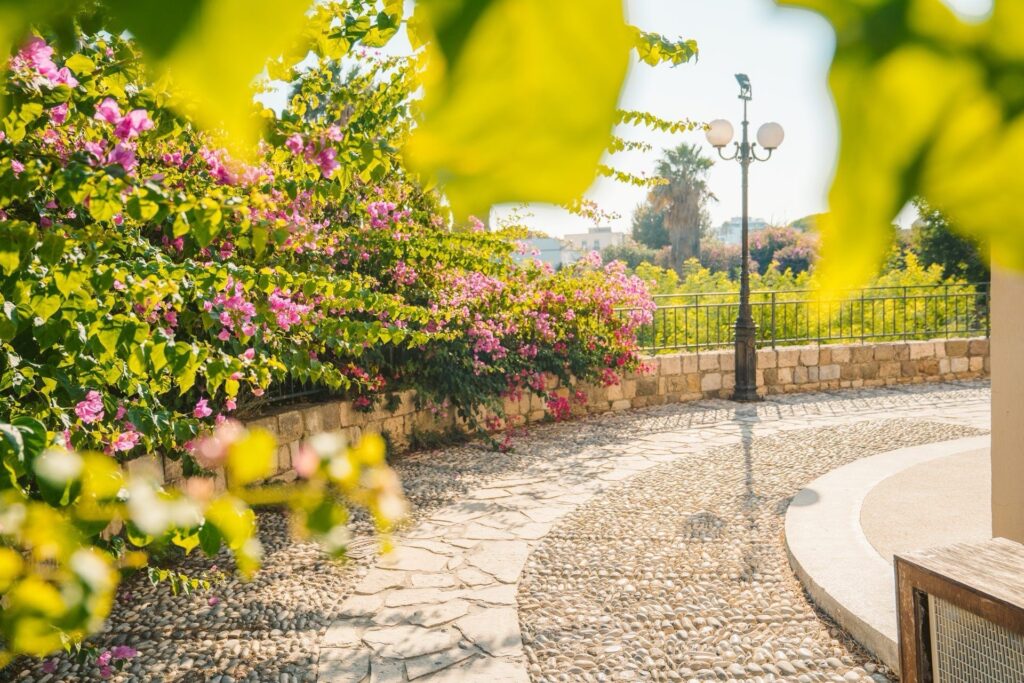
The Asclepeion: Cradle of Medical Science
On the verdant slopes of a hillside commanding panoramic views that embrace the sea stands one of antiquity’s most significant sacred sites. The Asclepeion of Kos, four kilometers from today’s urban center, represents a monument of global importance. Here, between the 3rd and 2nd centuries BC, operated the third-largest healing center of the ancient world.
The complex included therapeutic facilities, temples dedicated to Asclepius, bathing installations, and the renowned medical school where Hippocrates taught. The ruins preserved today reveal sophisticated architecture and the organized structure of a pioneering therapeutic institution that forever influenced the evolution of medicine.
As you stand among these ancient stones, imagine the pilgrims who traveled across the Mediterranean seeking healing. The terraced sanctuary, built into the hillside, created a natural amphitheater where patients underwent treatments that combined spiritual ritual with practical medical care. The gentle sea breeze that still whispers through the remaining columns once carried the hopes and prayers of countless seekers of wellness.
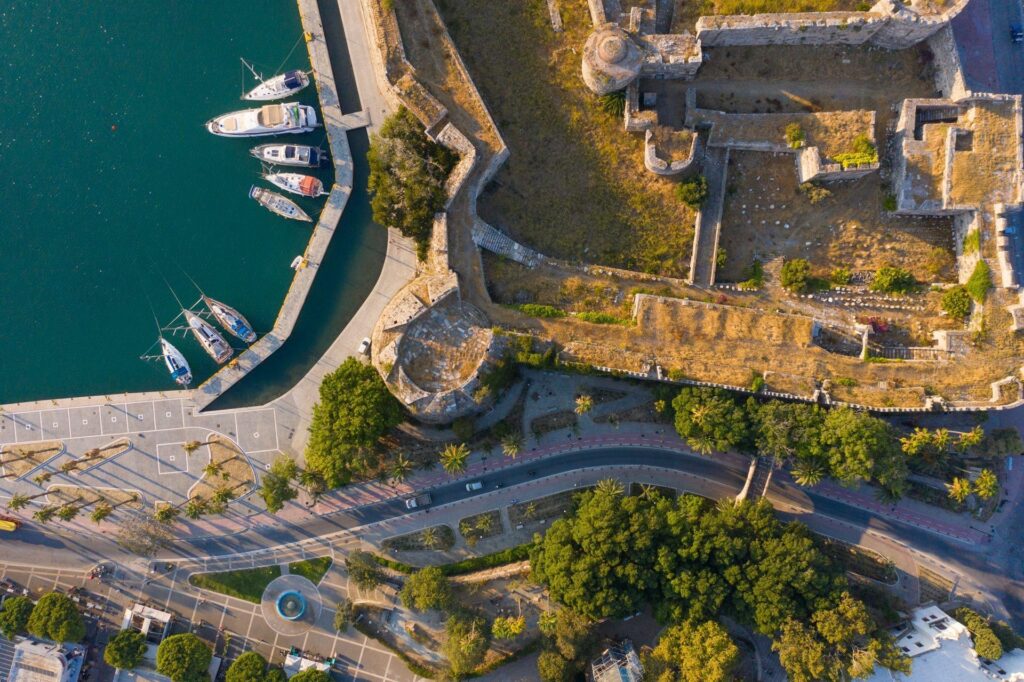
The City of Kos: Modern Urban Planning with an Ancient Soul
Though today’s city of Kos was rebuilt in the 1930s following devastating earthquakes, it bears the characteristics of Italian architecture with broad avenues, shaded squares, and modern seafront promenades. Yet every step reveals layers of history stretching back to classical antiquity.
The medieval castle of the Knights of Rhodes dominates the sea entrance to the city, while the fortified walls hastily erected in the 14th century for defense against the Ottoman Sultan bear witness to past struggles. In the city center stands the massive plane tree that tradition claims was planted by Hippocrates himself—a living link to the island’s medical legacy.
Walking through the harbor at dawn, when fishing boats return with their catch and the castle walls glow pink in the morning light, you feel the timeless rhythm of island life that has persisted for over two millennia.
Beaches of Unparalleled Natural Beauty
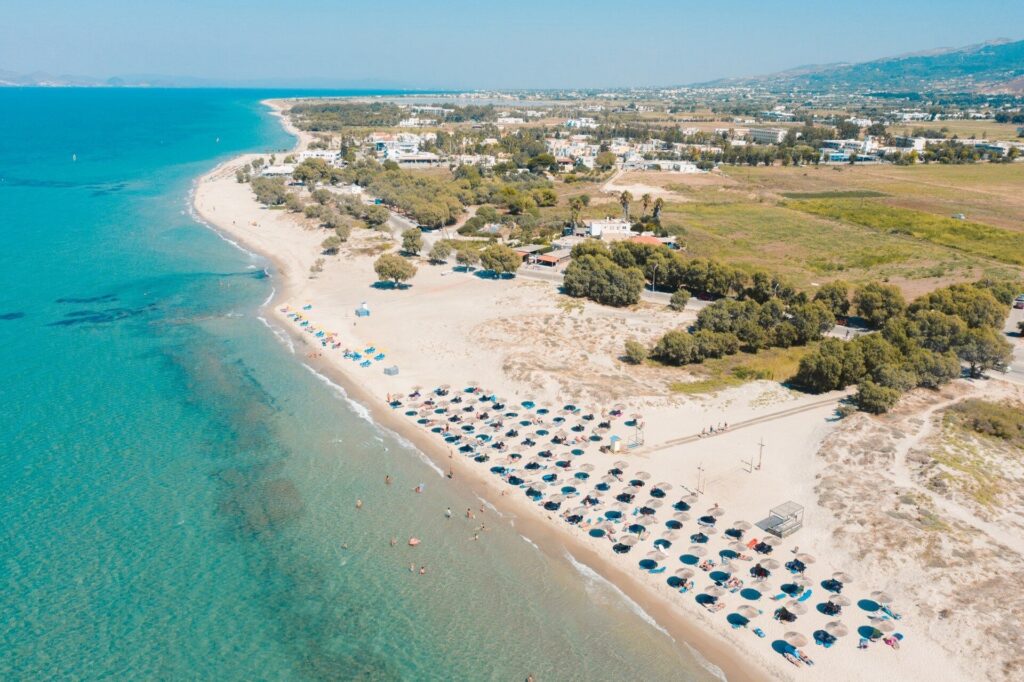
Kos’s coastline represents one of the Mediterranean’s most spectacular seaside destinations. Kardamena, with its crystalline waters and endless golden beaches, combines natural beauty with modern tourist infrastructure. For the intrepid traveler, Tingaki offers opportunities for extraordinary diving in an underwater world rich with biodiversity, while Mastihari charms with its calm waters and views toward neighboring Kalymnos.
Paradise Beach, at the island’s southern tip, lives up to its name with exotic lagoon-like estuaries and vegetation that reaches to the wave line. Here, flamingos often appear in the shallow areas, creating a unique spectacle for visitors who venture beyond the more crowded northern shores.
The true magic happens at sunset when the western beaches transform into natural theaters. The sky becomes a canvas of impossible colors reflected in still waters, while the silhouettes of distant islands create a dreamy panorama that explains why the ancient Greeks believed the gods chose these waters as their playground.
Fortress Antimachia: Monument to Heroism
In the island’s western section, atop rocky heights with strategic views in all directions, stands Antimachia Castle—one of the best-preserved medieval fortifications in the Aegean. This monument gained renown for its legendary defense in June 1457, when just fifteen knights with two hundred locals withstood twenty-three days against an army of sixteen thousand Ottoman warriors.
The castle’s interior spaces once housed an entire community with churches, storehouses, residences, and workshops. Today, walking along its stone pathways, visitors feel the intensity of ancient sieges and the grandeur of medieval architecture. The view from the battlements encompasses the entire island, revealing why this position was chosen as the ultimate defensive stronghold.
Hidden Treasures and Natural Phenomena
Plaka Forest: Home of the Peacocks
A few kilometers from Antimachia, a natural paradise reveals itself to hikers. The Plaka pine forest, planted in the 1940s, evolved into a sanctuary for peacock populations and rare birds. The forest’s colorful inhabitants approach visitors confidently, creating experiences of direct contact with wildlife rarely encountered in the Mediterranean.
The ethereal quality of dappled sunlight filtering through pine needles, punctuated by the otherworldly calls of peacocks, creates an almost mystical atmosphere. It’s a place where time seems suspended, where the boundary between the cultivated and the wild dissolves into something altogether more magical.
Therapeutic Springs: The Land that Heals
Kos’s geological uniqueness expresses itself through healing springs that bubble up at various points across the island. At Agios Fokas, Piso Thermes, Kokkinonero, and the Volcanoes, waters heated by geothermal processes offer therapeutic properties known since antiquity. Modern scientific analyses confirm the healing value of these natural resources for dermatological and rheumatic ailments.
Soaking in these natural hot springs while gazing out at the endless Aegean creates a profound connection to the island’s healing tradition. You’re not just experiencing a spa treatment—you’re participating in a therapeutic ritual that has continued unbroken for over two thousand years.
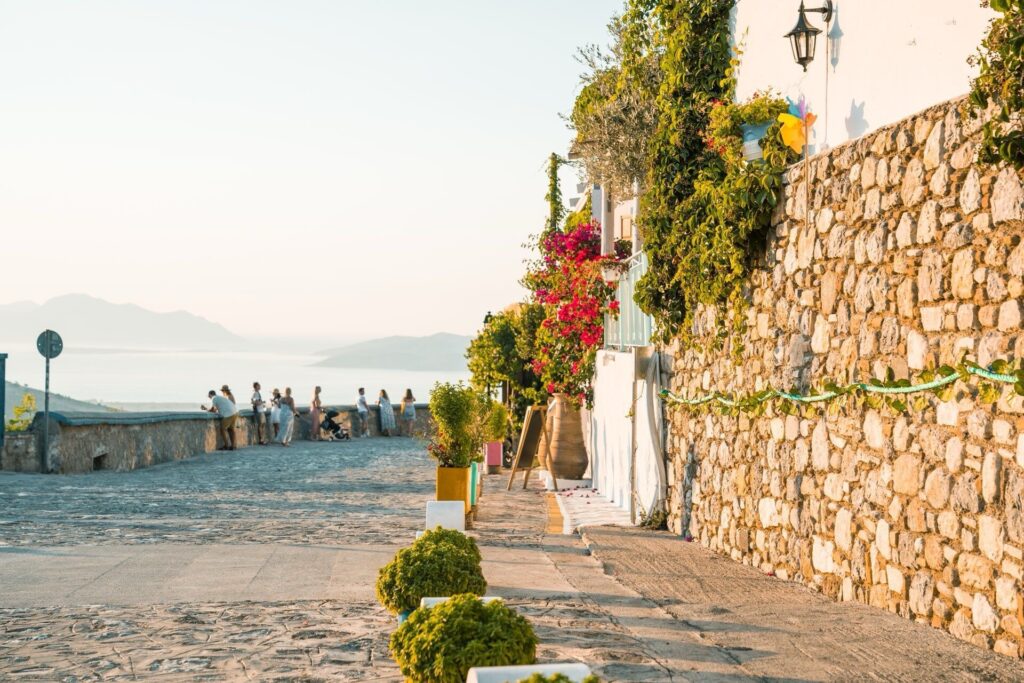
Cultural Heritage at the Archaeological Museum
In the city’s heart, at Freedom Square, the Archaeological Museum of Kos houses one of the most significant collections of ancient Greek art in the Aegean. The museum occupies a neoclassical building and presents select examples of sculpture, ceramics, and mosaics from all periods of the island’s history.
The head of goddess Hera in the entrance hall represents a masterpiece of Hellenistic art, while mosaic floors from Roman villas reveal the luxury of daily life in ancient Kos. Each hall narrates a chapter from the long history of an island that served as a crossroads of civilizations and center of intellectual development.
Standing before these artifacts, you realize that Kos wasn’t merely a provincial outpost but a cosmopolitan center where ideas, art, and healing traditions from across the ancient world converged and flourished.
The Eternal Island
Kos remains a destination offering multiple levels of experience—from relaxation on world-renowned beaches to spiritual elevation through contact with monuments of global heritage. Each season reveals different aspects of the island’s personality, making a visit to Hippocrates’ birthplace a life experience that leaves indelible traces in the traveler’s memory.
The island’s true gift isn’t just its stunning landscapes or remarkable ruins, but its ability to restore something essential in the human spirit. Here, surrounded by the same seas that inspired ancient philosophers and beneath skies that witnessed the birth of scientific medicine, modern travelers find their own form of healing—a reminder that some places on Earth possess a timeless power to transform those who encounter them.
Whether you come seeking history, natural beauty, or simply escape from the modern world’s relentless pace, Kos offers something increasingly rare: the opportunity to step outside ordinary time and reconnect with deeper rhythms of life that have pulsed through this sacred landscape for thousands of years.